3 min read
How to Offset Rising Forklift and Warehouse Equipment Costs
Derek Abel : October 23, 2026
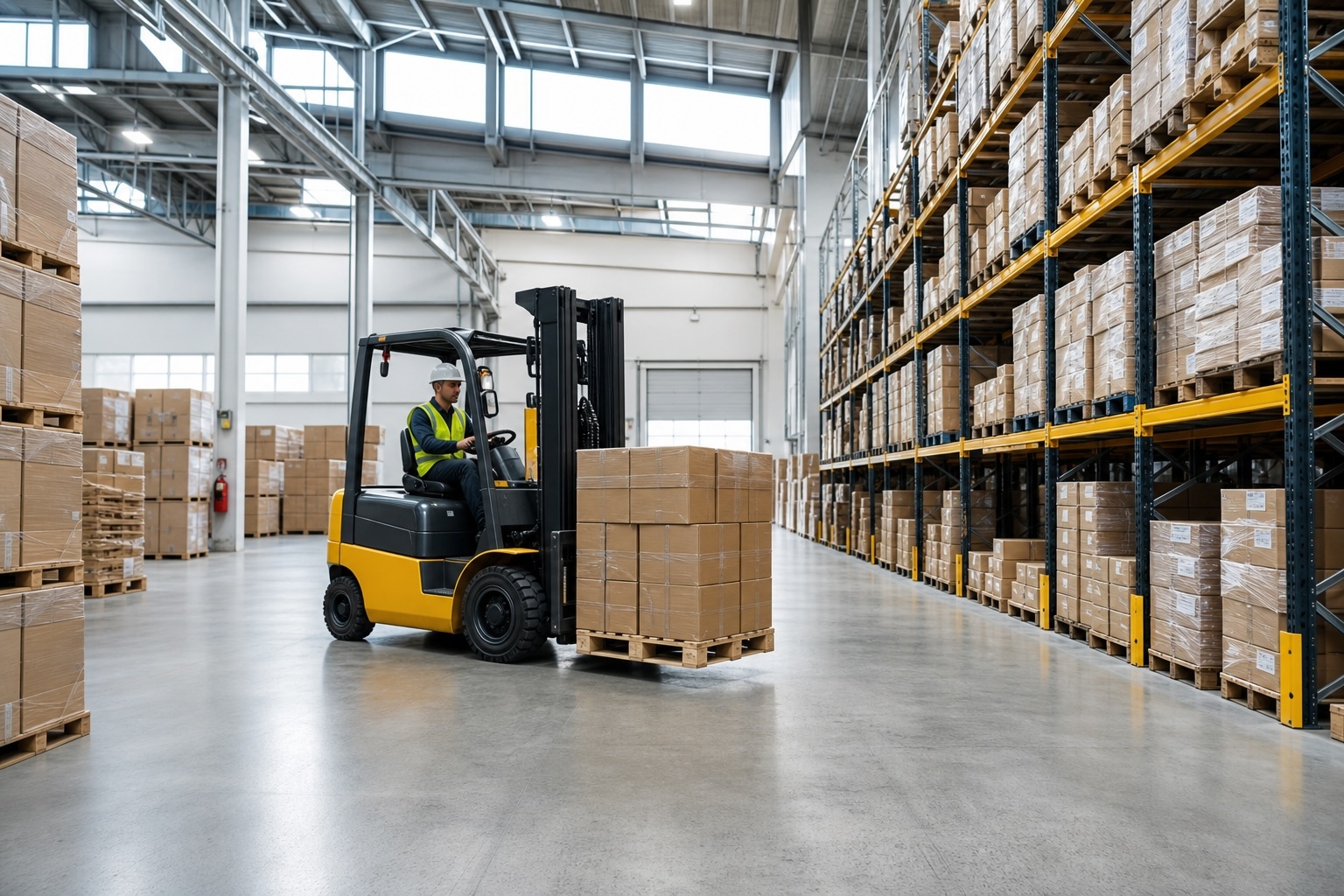
Owning a warehouse or distribution center is capital-intensive. The biggest expense is typically leasing or purchasing the facility itself, which varies greatly by size and location. Beyond facility costs, ongoing operational expenses include labor, utilities, insurance, and business-to-business (B2B) marketing.
Next, equipment costs are hard to overlook. Forklifts, pallet jacks, reach trucks, and conveyor systems are needed to move and organize goods. As you may know, forklifts and other warehouse equipment come with high price tags. The good news? There are strategies to help offset rising forklift and warehouse equipment costs. This Huddle Business Capital blog article explains.
Perform regular service checks and maintenance.
Forklifts and warehouse equipment are subjected to ongoing use, lifting, moving, and stacking heavy loads on a daily basis. They also face exposure to dust, moisture, and temperature fluctuations. Over time, as operational hours increase, these assets are prone to breakdowns. When this happens, it can disrupt operations and result in lost revenue.
Although you can't prevent forklifts and warehouse equipment from malfunctioning or breaking down, you can be proactive with regular service checks and maintenance. A service technician can catch minor problems early and perform regular service on brakes, hydraulic systems, electrical systems, and more. A study of 200 warehouse operations found that preventive maintenance lowered annual forklift operating costs by $2,800 to $3,600 per unit and increased productivity by 18%.1
Monitor forklift and warehouse equipment pricing.
Regularly monitor pricing trends for forklifts and other warehouse equipment. This includes tracking both new and used models and considering factors such as maintenance costs, availability, and discounts. You can do this by consulting a forklift dealer or material handling equipment dealer.
Staying informed about these prices will help you make better-informed investment decisions when purchasing forklifts or warehouse equipment, ensuring you get the best value.
Get equipment that's already in dealer inventory.
Forklifts and warehouse equipment currently in dealer inventory may have been acquired before increases in raw material prices, new tariffs, or rising costs imposed by manufacturers. As a result, you might be able to purchase, finance, or lease quality assets at more favorable price points.
In addition to potentially saving you money, procuring in-stock forklifts and warehouse equipment enables faster delivery. This means you can use the assets sooner.
Consider equipment financing or equipment leasing.
When it's time to acquire equipment for your business, such as a forklift, pallet jack, reach truck, or conveyor system, you have two options to preserve capital: equipment financing and equipment leasing. Both options eliminate the need for a large upfront payment, which makes it easier to keep cash available for other operational needs.
Additionally, financing or leasing may let you acquire more expensive forklifts or warehouse equipment than you could afford if you bought them outright.
Equipment financing
Equipment financing is also known as an equipment loan. It involves taking out a loan specifically to purchase equipment, allowing you to own the asset and make monthly payments over time. Once you complete the payment schedule, the equipment is entirely yours and provides value as a long-term asset.
Equipment leasing
Equipment leasing lets you use equipment without the upfront cost of ownership. Instead of purchasing, you enter a lease agreement and make regular payments for a predetermined period. This provides flexibility, as you may be able to choose from different end-of-lease options, such as renewing the lease, returning the equipment, upgrading to a new model, or buying it for its market value.
Scale based on demand.
When forklift and warehouse equipment costs increase, it can create budget constraints. This situation may make it challenging to invest in the essential assets needed to maintain efficient operations during peak seasons or when acquiring new clients. One strategy to consider is to adjust your resources based on demand.
One way to do this is by leasing additional equipment for a short term, such as 12 months, instead of permanently expanding your lineup. This approach lets you and your team make the most of the equipment during peak months or quarters, while keeping it available as a backup when business slows down.
Take a strategic approach to equipment acquisition.
Another way to combat rising forklift and warehouse equipment prices is to take a strategic approach to acquisition. This means using a balanced investment strategy that includes both new and used or refurbished equipment. By diversifying your equipment portfolio this way, your business can maintain productivity while managing costs.
When shopping for used or refurbished warehouse equipment, choose a reputable equipment dealer that offers warranties or service agreements. This way, you can ensure you are making safe and sound investments.
Conclusion.
It is difficult to predict whether forklift or warehouse equipment costs will increase in the coming months, or by how much. However, if you expect prices to rise, it may be wise to lock in today's prices. Huddle Business Capital can help with quick, hassle-free funding options for forklifts and warehouse equipment. Contact us today to get started.
Source.
1 - https://www.papemh.com/blog/5-ways-to-cut-forklift-operating-costs-without-sacrificing-performance/
Disclaimer.
This Huddle Business Capital blog article is purely educational and contains general information and opinions; it is not intended to provide advice or recommendations of any kind. Huddle Business Capital is not affiliated with nor endorses the companies mentioned in this article.