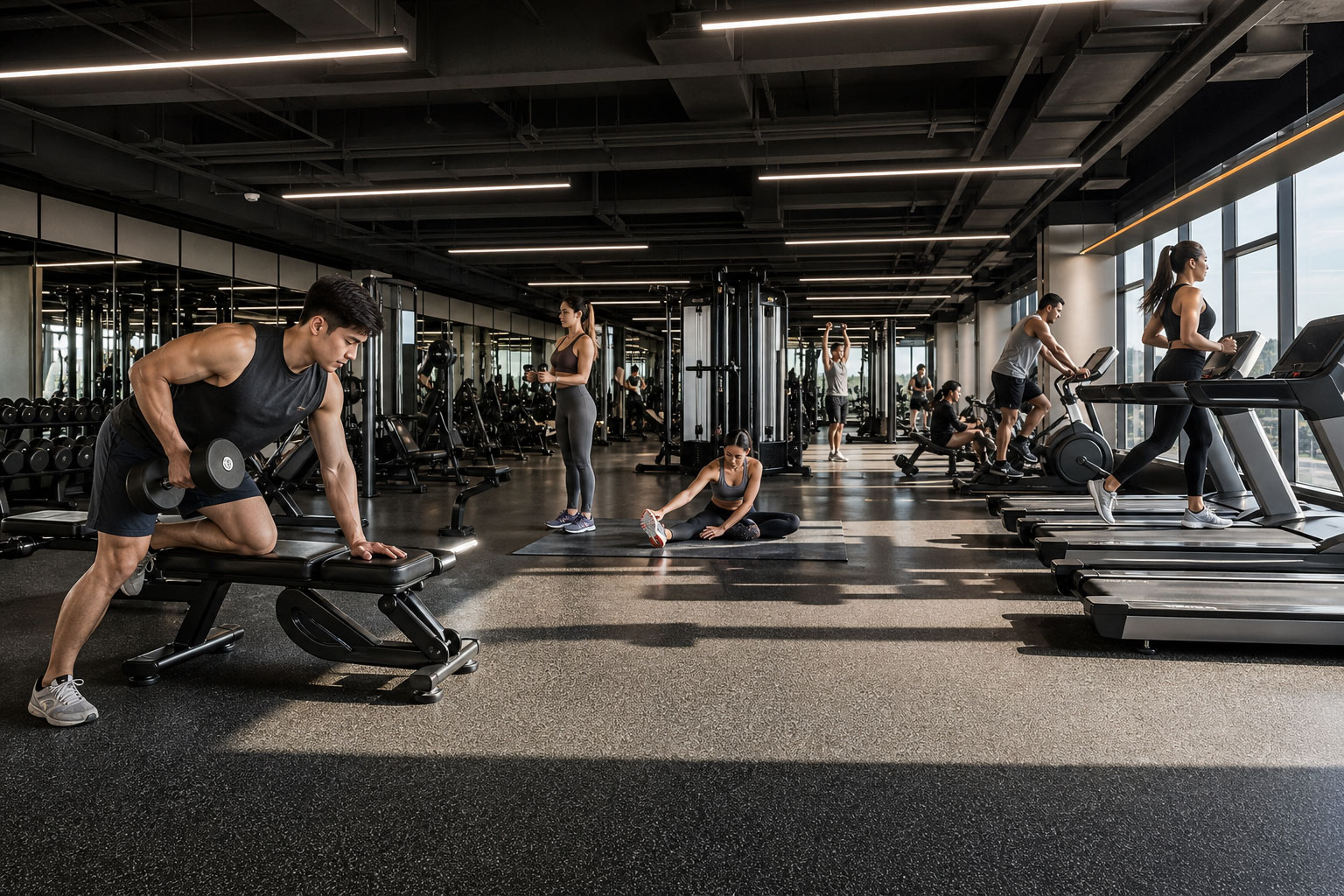
There are nearly 42,000 gyms and fitness centers in the United States, employing approximately 708,000 people1 and generating over $47 billion in annual revenue.2 The U.S. fitness industry is comprised of small boutique studios, medium-sized 24-hour keycard gyms, and large-scale commercial gyms, all vying for market share.
In the highly competitive fitness industry, maintaining a clean, modern facility with the latest equipment is essential for member retention and financial success. However, upgrading gym equipment and fitness centers can require significant financial investment, regardless of the operation's scale. Whether it is a small boutique gym or a large fitness center, the costs of buying new machines, updating decor, or expanding the facility can add up quickly.
The good news is that several cash-flow-friendly solutions can help with your gym's capital investment needs. This Huddle Business Capital blog article explains what they are and how they work.
Solutions to flex your financial muscle.
Outfitting your gym or fitness center with the latest commercial-grade equipment and machines can optimize performance, results, and member safety. This investment can also help your gym or fitness center stand out in a competitive market and position you as a leader in fitness innovation.
By financing or leasing gym and fitness center equipment, you can acquire commercial weight machines, treadmills, ellipticals, bikes, climbers, rowers, and more without a big upfront payment. You can put the savings toward other business needs, such as facility rent, utilities, payroll, and marketing.
Plus, most gym and fitness center equipment that you finance or lease qualifies for the Section 179 tax deduction. The eligible equipment must be put into business use by midnight on December 31st of the year it is acquired.
Gym and fitness equipment financing.
Equipment financing, also called an equipment loan, is a popular choice for many gym and fitness center owners. It lets you borrow money to buy one or more pieces of equipment, then repay the loan plus interest over a set time frame. Once you fulfill the payment schedule, you own the equipment outright and can continue using it to grow your gym or fitness center.
Gym and fitness equipment leasing.
Equipment leasing is similar to equipment financing because it doesn't require a large upfront down payment. The main difference is that leasing doesn't result in ownership of the equipment when your lease term ends. That said, your lender may let you purchase the equipment at fair market value, lease it for another term, or upgrade to newer equipment.
Business line of credit.
The need for quick funding can arise unexpectedly at your gym or fitness center. You might need to repair a malfunctioning treadmill or cardio machine, update your locker room, or cover trainer wages if membership numbers fluctuate and revenue decreases. In these situations, a business line of credit can provide a financial lifeline.
A business line of credit lets you access funds up to a predetermined amount instantly, and you pay interest only on the amount you draw. If you opt for a revolving line of credit, your available funding replenishes as you make payments.
Working capital loans.
The everyday costs of running a gym or fitness center can add up quickly. These expenses include employee payroll for receptionists, fitness instructors, and personal trainers, as well as utility bills for washing and drying towels.
You’ll also need to budget for cleaning crews to sanitize workout floors and equipment, plus software for member billing and session scheduling. A working capital loan can help cover these and many other short-term gym or fitness center expenses.
Term loans.
Some gym and fitness center projects are more complex and require significant capital investment. Examples include purchasing a facility, expanding an existing location, remodeling a facility, or adding a new space, such as for Pilates or stretching.
These projects require substantial upfront capital, which can come from a term loan. Term loans offer larger amounts than short-term working capital loans and are designed for long-term investments.
Conclusion.
According to a YouGov study®, people generally look for an affordable gym or fitness center close to home or work. Next, the top two things they look for in a gym are a clean environment and the right exercise machines and facilities.3
If you're planning improvements to your gym or fitness center and need fast, flexible funding, Huddle Business Capital is the ideal financial fitness coach. We offer a variety of financing solutions through our lender network. Contact us today to get started.
Sources.
1 - https://vantainsights.com/insights/how-many-gyms-in-the-us
2 - https://www.ibisworld.com/united-states/industry/gym-health-fitness-club-operation/1655/
3 - https://yougov.com/articles/41118-us-people-are-returning-gym-what-do-consumers-valu
Disclaimer.
This Huddle Business Capital blog article is purely educational and contains general information and opinions; it is not intended to provide advice or recommendations of any kind. Huddle Business Capital is not affiliated with nor endorses the companies mentioned in this article.