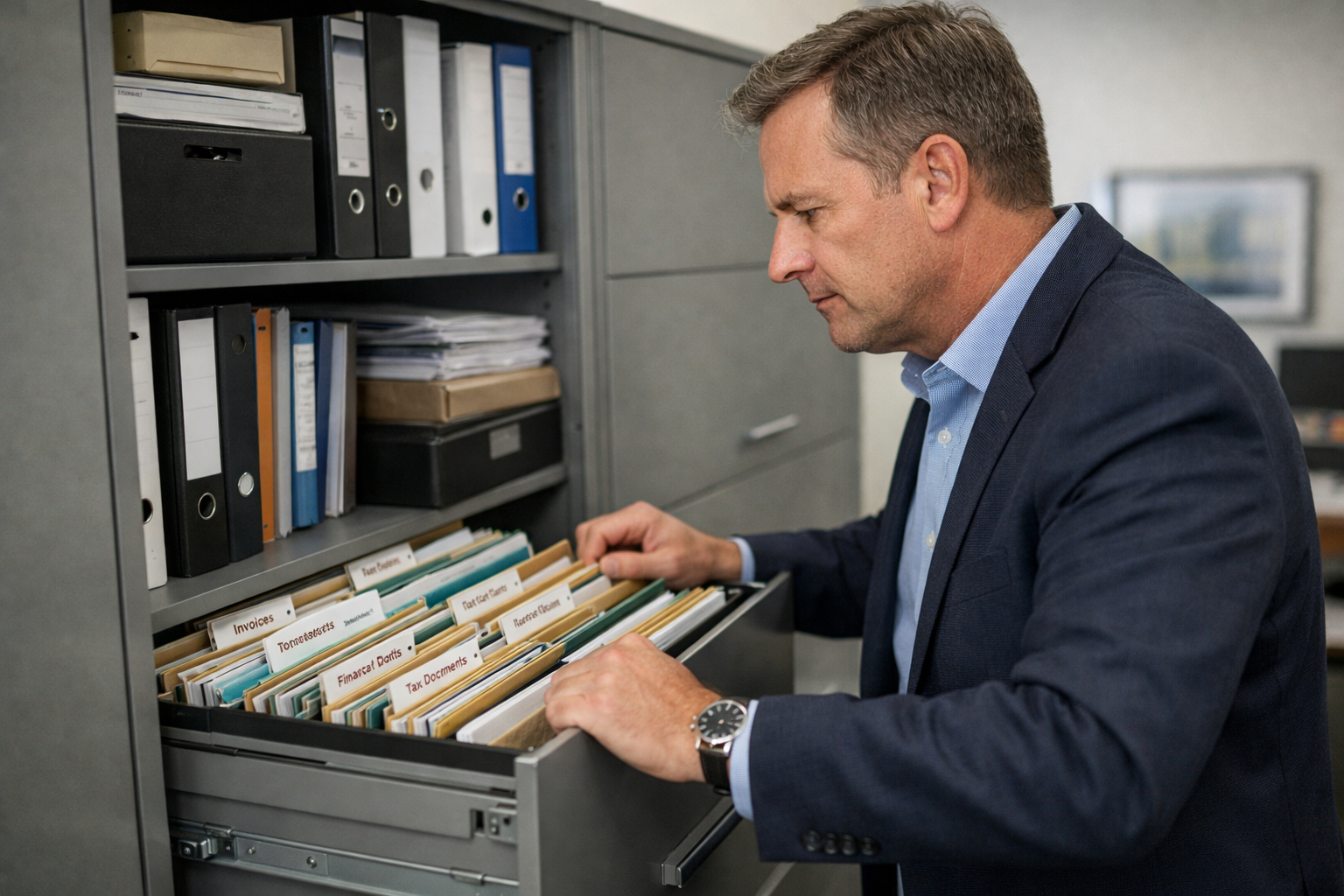
Accurate, organized bookkeeping is a necessity for every business. It allows business owners to gain insights into their company's financial situation, such as cash flow and sales trends, and plays a key role in financial planning and decision-making. Moreover, effective bookkeeping is necessary for tax compliance with the Internal Revenue Service (IRS). Accurate records enable businesses to file their taxes correctly and on time, avoiding audits by tax authorities.
Whether your business is in the startup phase or has been established for many years, adopting good bookkeeping practices can help ensure compliance with the IRS and provide peace of mind. If you’re seeking strategies to reduce the risk of a business tax audit, continue reading this blog article from Huddle Business Capital.
Keep your business records up to date.
Maintaining business records can often feel daunting due to the numerous tasks involved. However, when you implement a proven record-keeping system, such as cloud-based accounting software, the process becomes more manageable.
Make sure that you or your accounting manager regularly records all relevant information, including revenue and expenses. It is also helpful to keep both printed and digital copies of all documents, such as receipts and invoices. This practice keeps your accounting records current and reduces the risk of inadvertently omitting important information that could trigger a tax audit. Moreover, keeping your business tax records up to date can simplify the filing process.
Don't mix business and personal finances.
It is important to maintain a clear distinction between business and personal finances. Mixing the two can complicate budgeting and make it challenging to track cash flow and expenses. Plus, combining personal and business finances increases the risk of errors on tax returns, potentially leading to an audit.
Establishing separate bank accounts and credit cards for your business will help you keep this boundary. It's an effective way to keep your finances organized and separate, ensuring accuracy and compliance with tax regulations.
Ensure that deductions are not excessive.
Excessive deductions can raise suspicion and serve as a red flag for the IRS. For instance, claiming $250,000 in charitable donations on an income of $300,000 could seem questionable, as could declaring that a vehicle was used exclusively for business purposes throughout the entire year. Excess travel, meals, and entertainment deductions can also attract IRS audits.
To avoid this, check to confirm that your company's deductions are appropriate, documented, and supported by business-related expenses. Keep thorough records of your expenses and enter them into the appropriate sections of your accounting categories.
Don't claim business losses year after year.
It is completely normal for a new business to experience financial losses during its first year of operation. This initial phase often involves numerous expenses, such as startup costs, marketing efforts, and operational investments, which can exceed revenue. However, if a business claims losses year after year, it may raise suspicions with the IRS and could lead to an audit.
If your company is experiencing losses, consider focusing on strategies to improve your business operations and boost revenue. It might also be beneficial to seek professional advice from a financial expert to identify areas for growth and development.
Don't misclassify your company's employees.
When an employer misclassifies employees—such as categorizing a full-time worker as an independent contractor—it can result in serious consequences, including an IRS audit, back taxes, and legal issues. Therefore, it is crucial to correctly classify your workers.
Proper classification impacts payroll and benefits and has significant implications for tax obligations, legal compliance, and workers' rights. Additionally, it can help improve employee morale.
Document all cash transactions.
Various businesses, including coffee shops, restaurants, hair salons, cleaning services, and landscaping services, accept cash. Without an effective record-keeping system, these businesses risk underreporting their cash income. This discrepancy could result in an IRS audit if the reported figures do not match the actual earnings on a business tax return.
If your company conducts cash transactions, you and your employees must keep records of each transaction for proper income reporting and tax compliance. This logging process should include details such as the date and time of the transaction, the amount of cash exchanged, and a brief description of the transaction. Additionally, consider investing in cash sales or business receipt tracking software to streamline this process.
Hire a business tax professional.
Hiring a qualified business tax professional is an excellent way to stay compliant and minimize errors when filing your company's tax return. These experts can help you navigate federal and state tax regulations, identify potential deductions and credits, and keep your business in good standing with tax authorities. A tax professional can also recommend strategies if your company has excessive tax debt.
Plus, professional accounting fees are tax-deductible for business owners and self-employed individuals, classified as ordinary and necessary operating expenses. However, it's important to note that the IRS can change tax laws without prior notice. Therefore, it is advisable to consult an accountant to stay informed about the latest tax regulations.
Disclaimer.
This Huddle Business Capital blog article is purely educational and contains general information and opinions; it is not intended to provide advice or recommendations of any kind. Huddle Business Capital is not affiliated with nor endorses the companies mentioned in this article.